Transition risk
Telescope provides a simple workflow for transition plans, enhancing asset value, sustainability, and reducing tenant costs.


Telescope provides a simple workflow for transition plans, enhancing asset value, sustainability, and reducing tenant costs.
With rising climate risks, the EU requires disclosures. Telescope helps you reduce risks and protect asset value.

Telescope helps you manage biodiversity, aligning your projects with ecosystem preservation.

Keep track of risk across entire portfolios with a birds-eye-view.

Banks are learning fast. In this article, we explore what we learned from SpareBank 1 Sør-Norge’s Jørund Buen about how climate risk is becoming part of everyday banking - from lending decisions and credit assessments to data, regulation, and the future of sustainable finance.
When Norwegian banks first discussed adding energy labels to their credit assessments, everyone agreed it made sense — but no one moved.
Jørund Buen recalls sitting in a Finance Norway working group where several banks were gathered. As he remembers it:
“The history of energy labels is that all the banks literally sat around a table and glanced at each other … ‘Us too!’”
A classic coordination problem — everyone wanted progress, but no one wanted to go first.
That hesitation didn’t last. Today, most major Norwegian banks have begun asking new questions:
How energy-efficient are the buildings they finance?
How exposed are they to floods or landslides?
Do borrowers have credible plans to improve performance over time?
For Jørund, this isn’t about box-ticking. It’s about understanding risk.
As he puts it:
“The most important thing for the bank is our lending – credit risk is absolutely at the top. And increasingly, sustainability risk as well. That can be climate risk, for example.”
Every loan above NOK 10 million now goes through a structured ESG review — a checklist covering physical and transition risk, social factors, governance, and industry-specific questions.
For property loans, advisors document expected energy class, physical exposure, tenant situation, and planned improvements. They look at what could affect value not just today, but years ahead.
As Jørund explains:
“It’s important to have an eye on what might come a bit further ahead.”
The goal isn’t to punish customers — it’s to understand risk properly.
Assessing climate risk is a balancing act. Push customers too early, and you risk forcing upgrades that are poorly timed. Wait too long, and both borrower and bank may face painful write-downs.
Jørund describes the two extremes clearly:
On pushing too early:
“You risk the customer taking on high costs now, even though the premises might have functioned for some time still.”
On waiting too long:
“But the opposite can also be a very bad outcome if we don’t prepare our customers … it can become very painful very quickly.”
This is made harder by uncertainty around the EU Buildings Energy Directive — a regulation that may eventually restrict leasing or selling low-performing buildings, but with unclear timing in Norway.
Banks must prepare customers without knowing exactly when the rules will hit.
Borrowers often expect large “green loan discounts,” but in reality, the difference is still modest. The bank’s own funding advantage through green bonds is small — and that limits how much can be passed on.
Longer term, the shift may come from brown penalties: higher pricing and shorter tenors for properties with poor performance and no improvement plan.
As Jørund notes:
“If you are a new customer and come walking in with an energy label G … that will raise some flags that signal rental or resale risk.”
But if the customer has a credible plan:
“If you have a clear plan to raise the standard to C, then the discussion becomes much more pleasant.”
ESG data is no longer symbolic — it’s becoming central to lending logic.
One of the biggest challenges for banks is learning to see physical and transition risk together — and to recognise how local those risks are.
The merger that created SpareBank 1 Sør-Norge illustrated this clearly:
“Sør-Øst-Norge had lots of marine sediments, high mountains and deep valleys – very exposed. And the other bank had almost no mountains, no rivers, no sediments.”
Risk profiles vary widely across regions.
And official datasets don’t always match reality on the ground.
Jørund points to the bank’s own headquarters:
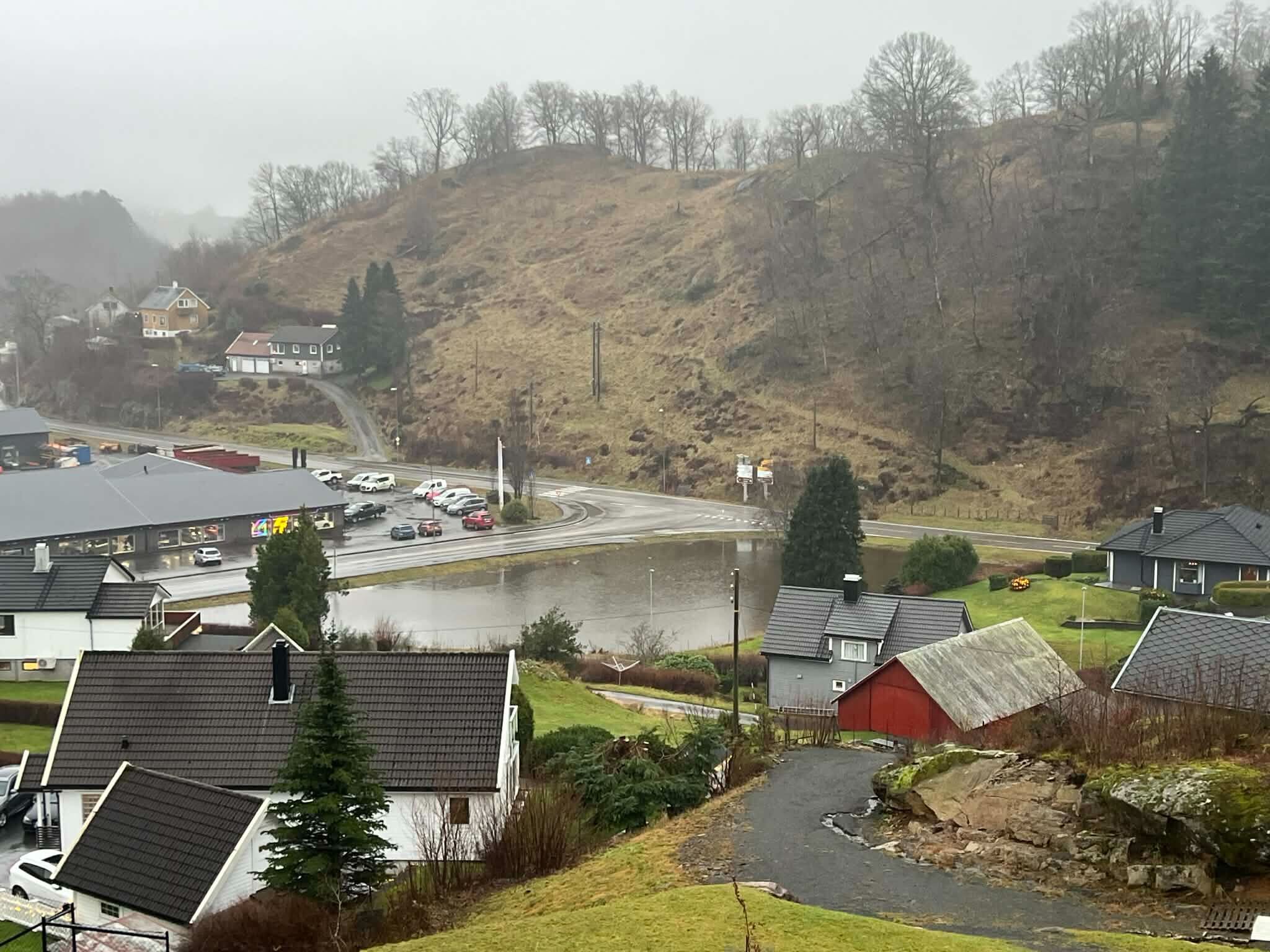
“If you come to Finansparken, you wouldn’t exactly think that the surface-water risk here is very high in reality.”
Models don’t yet capture mitigation measures — something banks must learn to interpret.
The competitive dynamics that once held banks back are now pushing them forward.
Over time, lenders have started aligning on expectations around energy labels, documentation, and physical-risk checks.
What began as “Who goes first?” is becoming a space of peer learning.
Banks are watching each other not to copy, but to calibrate — and a shared picture of good practice is slowly taking shape.
Climate considerations are no longer an add-on.
They’re becoming part of how credit is assessed, priced, and managed.
Working closely with banks, we see the same shift playing out in practice.
Lenders are moving from broad, portfolio-level reporting to asset-level insight — connecting physical and transition risks to real credit decisions.
Banks aren’t waiting for perfect models. They’re experimenting, comparing approaches, and learning together.
The challenge isn’t identifying risk — it’s turning that insight into lending logic.
And that’s where the next wave of innovation will happen:
Using climate intelligence to make faster, fairer credit decisions that protect both people and portfolios.
Because in the end, good banking and good climate-risk management share the same goal:
Seeing the risk before it becomes a loss.